

Defining the energetic beats of electronic dance music, EDM musicians craft immersive soundscapes using specific tools. Here, we unpack the essential gear that these artists, particularly EDM musician, depend on, offering insights into their creative worlds.
Key Takeaways
- EDM has evolved from its disco roots in the 1970s to a diverse and globally recognized genre by the 21st century, with artists like Tiësto, Daft Punk, and David Guetta (to name a few) propelling its popularity.
- Essential gear for EDM production includes Digital Audio Workstations for audio editing and mastering, synthesizers for sound creation, drum machines for rhythmic sequences, and MIDI controllers for enhanced musical control.
- The future of EDM is intertwined with advanced technology like artificial intelligence, which will streamline music composition and potentially redefine EDM production and sound design.
The Rise of EDM
The beginnings of EDM can be traced back to the disco movement of the 1970s when iconic hits like Donna Summer’s ‘I Feel Love’ introduced the world to a new sonic landscape (big up to the Italian Producer Giorgio Moroder from this rare gem). The genre evolved during the 1980s, with synthpop making extensive use of drum machines and synthesizers. This era saw the rise of electronic pianos that added a new dimension to the genre. The first piano was invented by Bartolomeo Cristofori, who introduced the hammer mechanism—a key innovation that set the piano apart from earlier keyboard instruments like the harpsichord and organ. The invention of the piano and its hammer mechanism allowed for greater expressive control, influencing the development of modern keyboard instruments now used in EDM.
By the time the 1990s rolled around, EDM had splintered into diverse sub-genres like:
- Techno
- House
- Hardstyle
- Dub
- Trance
- Drum and bass
This diversity cemented the genre’s place in European mainstream music culture. Meanwhile, in the United States, Detroit techno emerged as a significant milestone, with artists like Derrick May leading the charge and influencing the EDM scene.
As the 21st century dawned, EDM gained global recognition, propelled by artists like (already said that?) Tiësto, Daft Punk, and David Guetta elevated the genre to unprecedented heights. The early 2000s also saw the rise of dubstep in the United States, with artists like Skrillex contributing to the genre’s expansion. Today, EDM’s influence is widespread, its techniques permeating other musical genres, including pop and hip-hop, and continually shaping the music industry.
Essential Equipment for EDM Production
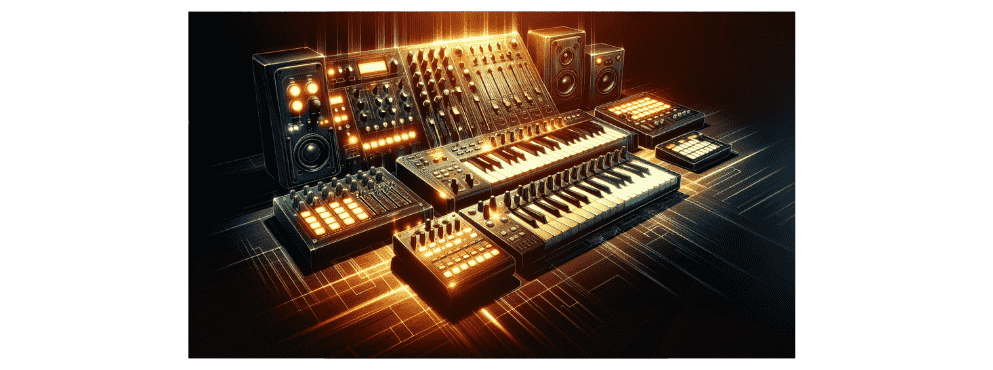
The dawn of digital technologies triggered a revolution in dance music production. Suddenly, advanced sound manipulation was within reach even from home studios, completely redefining how musicians crafted EDM. The industry saw the introduction of software tools, including sound-manipulating plugins and virtual synthesizers, that expanded the creative capabilities of producers. Digital pianos and MIDI controllers can be connected to a computer, enabling seamless composing, recording, and producing of EDM tracks through integration with digital audio workstations (DAWs).
These tools facilitated high-quality music production, including classical music, allowing musicians to produce content that resonates with audiences worldwide and explore various key range possibilities. Among the variety of digital pianos and keyboards available, some brands have notably improved their sound engines and features compared to other manufacturers.
Digital Audio Workstations (DAWs)
Digital Audio Workstations (DAWs) serve as the bedrock of audio production. These virtual studios allow for:
- Recording
- Editing
- Mixing
- Mastering audio
All central to EDM creation, they facilitate the recording and playback of multiple audio and MIDI tracks, capturing a wide range of instrumental and vocal performances. This function has opened up a plethora of possibilities for EDM musicians using electronic keyboards, digital pianos, electric pianos, and acoustic pianos, allowing them to access all the notes they need for their compositions on a piano keyboard.
DAWs equip EDM producers with indispensable tools such as:
- audio editing capabilities
- MIDI sequencing
- a virtual mixing console
- a wide range of audio effects plugins
Advanced features such as automation have added a new dimension to EDM tracks, enabling dynamic changes in volume, panning, and other parameters over time.
Support for various audio file formats in DAWs has made collaboration between artists seamless and efficient. Organizational features within DAWs, such as browsing, categorization, and tagging, have improved the efficiency of accessing and auditioning sounds during production.
When choosing the right DAW or digital piano, it’s important to note that there are beginner-friendly models available, making it easier for those just starting out to learn and progress. Additionally, selecting a digital piano with the appropriate key range and connectivity options is crucial to complement the capabilities of DAWs in EDM production. Many digital pianos now feature an lcd screen, providing an intuitive interface for accessing sounds and settings, which enhances user navigation and overall workflow.
Before making a purchase, be sure to check the current price of digital pianos and DAWs to ensure you have the most up-to-date information.
Discover Why Should You Choose Steinberg Cubase as Your Digital Audio Workstation.
Synthesizers and Drum Machines
Owing to their versatility in sound creation, synthesizers have carved out an integral role in EDM. Offering various waveforms, oscillators, and filters, synthesizers have allowed musicians to shape the sound to their preference. Modern synthesizers now include software integration, enabling advanced sound design with features like patch saving and complex modulation.
Conversely, drum machines lay down the rhythmic foundation of EDM, thanks to their programmable beats and tempo controls. They have enabled musicians to create complex percussion sequences that define the genre’s rhythm. Modern drum machines now come with real-time manipulation features, enabling live performance variations such as pitch bending and reverse playback, for example.
Considering how many octaves a digital piano or keyboard has is crucial for EDM production. Most modern pianos have seven octaves, which is the standard for a standard piano with 88 keys. However, for EDM producers, a keyboard with 61 keys is a popular and portable option, especially for those needing a compact setup. For many EDM producers, using a keyboard with fewer than 88 keys is perfectly fine for most production needs. While the standard piano has 88 keys, some high-end models from niche manufacturers offer more keys, providing an extended range beyond the typical seven octaves.
The combination of the harmonic capabilities of synthesizers with the rhythmic precision of drum machines has been fundamental in producing the electronic sounds that define EDM. This fusion has contributed to the versatility of electronic keyboards, digital pianos, and even acoustic piano in creating unique EDM tracks, often incorporating piano music elements.
Do you know How Many Keys Are in a Piano?
MIDI Controllers and Other Gear
MIDI controllers have established themselves as a key component of contemporary EDM production. They are primarily used for making electronic music, contributing to the core of EDM production. Some features of MIDI controllers that have enhanced their versatility include:
- Velocity-sensitive keys
- Pads
- Knobs
- Sliders
Many digital pianos and MIDI controllers also allow users to record, save, and practice with a collection of songs, with some models supporting a large number of recordable or built-in songs for enhanced music performance and practice.
These features give EDM musicians more control over their creations.
To complement their MIDI controllers, EDM musicians often use additional gear like high-quality headphones, studio monitors, and a portable keyboard with 88 keys and extra keys. These tools provide a complete production and performance setup, enabling musicians to effectively produce and deliver dynamic performances.
Through the strategic use of MIDI controllers, headphones, and studio monitors, EDM artists can orchestrate captivating live performances teeming with dynamic interest. These tools have enhanced the functionality of electronic keyboards, digital pianos with weighted keys, and portable keyboards, making them indispensable in the world of EDM. One might wonder, how many keys do these instruments typically have?
Suggested Reading: How to Make a Home Recording Studio: Your Complete Guide
Effects Processors and Pedals
Effects processors and pedals are powerful tools for any EDM musician looking to elevate the sound of their digital pianos and electronic keyboards. By integrating effects like reverb and delay, musicians can add depth, space, and complexity to their piano music, whether performing live or recording in the studio. These effects are especially popular in both electronic and classical music, where unique textures and sonic landscapes are often desired.
Many modern digital pianos, such as the Roland FP-30X, come equipped with built-in effects processors, offering a range of sounds including reverb, delay, and even distortion at the touch of a button. For those seeking even greater control and customization, external effects pedals can be connected via MIDI or audio interfaces. This setup allows musicians to experiment with a wide variety of sounds, layering effects to create signature tones that set their music apart.
Whether you’re performing classical pieces or crafting cutting-edge EDM tracks, effects processors and pedals open up a world of creative possibilities. They enable musicians to shape their sound in real time, making every performance and recording session a unique musical experience.
Monitoring and Playback Systems
For digital piano and electronic keyboard players, having an accurate monitoring and playback system is essential to truly hear and refine your music. While many portable keyboards and digital pianos come with built-in speakers, these are often designed for convenience rather than precision. To experience the full range and detail of your sound, investing in high-quality headphones or studio monitors is a must.
Headphones with a flat frequency response provide an immersive and honest listening experience, allowing musicians to catch subtle nuances in their playing and production. Studio monitors, such as the Yamaha HS8, are engineered to deliver accurate sound reproduction, ensuring that what you hear in your studio is what your audience will hear on any system. This level of clarity is crucial for mixing, mastering, and live performance preparation.
When choosing a monitoring system, consider factors like frequency response, dynamic range, and connectivity options, including headphone jacks and MIDI interfaces. A reliable monitoring setup not only enhances your ability to create and play music but also ensures that your digital piano, portable keyboard, or electronic keyboard sounds its best in any setting.
Studio Setup and Acoustics
A thoughtfully designed studio setup and proper acoustic treatment can make a world of difference in the sound quality of your digital pianos, electronic keyboards, and even acoustic pianos. Acoustic pianos and grand pianos are particularly sensitive to room acoustics, requiring careful placement and the use of absorption panels or diffusers to minimize unwanted reverberation and echo. This attention to detail helps these instruments sound their best, capturing the full richness of their tone.
Digital pianos and portable keyboards are generally more forgiving when it comes to room acoustics, but a well-treated space can still enhance their sound, making your music production more accurate and enjoyable. Consider the key range and how many keys you need for your style—whether you’re working with a full 88-key digital piano or a compact portable keyboard, your studio should accommodate your instrument’s features and connectivity needs.
By investing in acoustic treatment and planning your studio layout, you’ll create an environment where your music and keyboards can truly shine, ensuring every note and nuance is heard as intended.
Crafting Your Unique Sound
One can carve out a unique sound in EDM by concentrating on designing a standout lead sound during a drop, thereby seizing the audience’s attention. Layering different elements such as basslines and leads, while carefully managing EQ settings to prevent frequency overlap, contributes to a rich and distinct sound. This technique gives EDM musicians the ability to create tracks that stand out in a crowd.
Vocal chops have become a popular tool in EDM, capturing the listener’s attention due to the intrinsic human recognition of the human voice by the human ear. This technique enhances the uniqueness and emotional connection of a drop, making the track more memorable.
Adding unexpected musical elements or breaks in the music can add a level of surprise and maintain interest, making the EDM track more memorable. This technique allows musicians to break the mold and create unique sounds that resonate with listeners.
And we all know a memorable tune worth remembering, don’t we?
Collaboration and Networking for EDM Musicians
Collaboration and networking are at the heart of success for EDM musicians, and today’s digital pianos and electronic keyboards make it easier than ever to connect and create with others. Many modern instruments, like the Kawai ES920, feature MIDI and audio interfaces, allowing seamless integration with computers, other keyboards, and a wide range of instruments. This connectivity enables musicians to play, record, and share music effortlessly, whether in the studio or online.
Software instruments and plugins, including virtual pianos and synthesizers, can be controlled via MIDI, opening up endless possibilities for collaborative music production. Online platforms and social media have revolutionized networking, making it simple to share your music, exchange ideas, and work with fellow musicians around the globe.
Attending music production workshops and conferences is another great way to expand your network, learn about the latest trends, and discover new technologies, such as weighted keys and advanced piano keyboard controllers, that can enhance your creative process. By leveraging these tools and opportunities, EDM musicians can stay connected, inspired, and at the forefront of the industry.
Marketing and Branding for the Modern EDM Artist
Establishing a robust online presence serves as a pivotal marketing strategy for EDM artists. Platforms like genre-specific blogs, YouTube, and streaming playlists offer platforms for artists to reach their target audience. Creating distinctive content helps artists stand out on these platforms and attract potential fans. This strategy allows them to effectively market their unique sound.
Email newsletters continue to serve as a precious communication conduit for EDM artists to connect with their most fervent fans. They provide a platform for artists to share updates, new releases, and other relevant content with their audience.
The rise of streaming services has transformed the distribution of music, allowing for direct sharing of content between artists and listeners. Social media advertising offers an affordable and accessible way for EDM artists to promote their music to targeted audiences.
Even though you need to set and establish a budget, these strategies have made it easier for artists to reach their target market and increase their fan base.
Performance Techniques for EDM Musicians
For a DJ, the capacity to perceive and respond to the audience’s energy is paramount to their performance success. Visibly enjoying the music, along with acknowledging the audience, is key to avoiding a disengaged performance. Interacting with the audience is essential to the live EDM experience. DJs can energize a less responsive crowd by leading by example and creating an energetic atmosphere.
Dynamic performance techniques such as:
- Using DAWs tailored for live performance control loops, effects, and samples in real-time
- Enhancing the audience’s listening experience
- Creative use of reverb swells
In these ways, you add depth to the performance, making it more engaging for the audience and providing extra notes for a richer experience.
Performance gigs present EDM artists with both a source of income and a powerful marketing platform to expand their audience reach. These opportunities allow artists to demonstrate their ability to play electronic keyboards, digital pianos, and even a grand piano, showcasing their skills to a wider audience.
Budgeting and Investment for EDM Gear
Smart budgeting and investment are crucial when building your EDM setup, especially when it comes to digital pianos and electronic keyboards. Start by setting a clear budget and prioritizing your needs—consider the key range, whether you want weighted keys for a real piano feel, and additional features like a transpose function or the ability to play four octaves.
Take the time to research and compare different models, reading reviews and watching demos to find the instrument that best fits your music production goals and financial plan. For beginners or those on a tight budget, a portable keyboard or entry-level digital piano can be a great starting point, with the option to upgrade to a more advanced model as your skills and needs grow.
Don’t overlook the importance of investing in a quality pair of headphones and a reliable monitoring system. Accurate sound reproduction is essential for both practice and production, whether you’re playing on an 88-key digital piano, a 61-key keyboard, or a classic acoustic piano. By making informed choices and focusing on the features that matter most to you, you’ll build a setup that supports your music and your growth as a musician.

Navigating the Business of EDM
For EDM musicians, effective financial management is of utmost importance. Here are some tips to help manage your finances:
- Create a budget to avoid impulsive spending on non-essential items and ensure that your financial resources are used wisely.
- Stay true to yourself and be consistent with saving money.
- Be aware of industry temptations and make smart financial decisions.
By following these tips, you can effectively manage your finances as an EDM musician.
EDM musicians may partner with record labels for music production, distribution, and promotion. However, this partnership often involves sharing a percentage of their income with the label. A contract with a record label can impact an EDM artist’s control over their brand, including decisions about music releases and image portrayal.
Artists should weigh the pros and cons of signing with a record label, considering their values and the potential loss of independence. Alternatives to traditional record labels exist, such as ‘record label as a service’ companies, which offer services for a fee rather than taking rights to the artist’s brand.
Avoiding overbooking and being selective with gigs can prevent physical and emotional exhaustion, prioritizing well-being over financial gain. Having a supportive management and personal network that prioritizes the artist’s health is vital for a sustainable career. Networking with other artists and industry professionals is crucial for building relationships that can enhance an EDM artist’s career.
Health and Lifestyle Tips for EDM Musicians
EDM musicians need to prioritize sufficient sleep. Some strategies they use include:
- Using aids like melatonin or CBD oil to minimize jet lag
- Engaging in meditation and relaxation practices
- Regular exercise, such as sport climbing, running, or yoga, to reduce stress, anxiety, and the symptoms of various mental health conditions
These routines are vital for the demanding lifestyle of EDM musicians.
Implementing diets like keto or veganism can improve cognitive function and general health. These diets offer a first line of defense for EDM artists against the taxing nature of their professional lifestyle.
Take care of your physical and mental well-being and always be ready to create and perform your best music.
The Future of EDM: Trends and Predictions
With the breakthrough of artificial intelligence, the future of EDM appears promising. AI is enhancing EDM composition by automating the generation of lyrics and choruses, allowing musicians to concentrate more on elements like melody, harmony, and the intricate aspects of production. This advancement will allow EDM musicians to spend more time creating unique sounds, pushing the boundaries of the genre (and we all know that technology and music are deeply intertwined).
The integration of AI in EDM production is just the beginning. As technology continues to evolve, we can expect to see more advancements that will redefine the way EDM is created. The future is exciting, and we can’t wait to see where it takes us in the world of EDM.
I’m expecting to see a Cyborg DJ playing… maybe somewhere… maybe someday.
Summary
The pulsating world of EDM has come a long way since its inception in the disco era (Ciao Giorgio 😁).
Its evolution has been marked by the advent of digital technologies, the use of electronic keyboards and digital synths, and the creative genius of artists who have pushed the boundaries of the genre. The journey into the world of EDM is an exciting one, filled with opportunities for creativity, innovation, and success. And still under development.
The future of EDM holds great promise with the integration of artificial intelligence in music composition. As we look ahead, we’re excited to see how these advancements will shape the genre. Through innovation, creativity, and passion, the EDM industry will continue to evolve, creating a vibrant and dynamic soundscape for music lovers worldwide.
Frequently Asked Questions
What is a good brand of 88 keys electric piano?
Yamaha, Casio, Roland, and Korg are all reputable brands of electric keyboards to consider for your purchase. You can explore these options to find one that suits your requirements.
What does EDM mean?
EDM stands for Electronic Dance Music, encompassing a variety of electronic music genres often played in nightclubs and known for their strong, danceable beats.
What is the significance of digital pianos and electronic keyboards in EDM?
Electronic keyboards and digital pianos have revolutionized EDM by providing a versatile platform for creating unique sounds, used in conjunction with DAWs, synthesizers, drum machines, and MIDI controllers to define the genre. Many digital pianos and keyboards include a variety of instrument sounds, such as strings, expanding creative possibilities for producers. The layout of white keys and black keys on a keyboard allows for a full range of musical expression, which is essential for both performance and production. While most EDM music does not require the full range needed for classical composers, a few exceptions exist where certain pieces require more keys than standard models offer. The importance of digital keyboards in EDM cannot be overstated, as they offer musicians the ability to explore variations in key lengths and produce sounds tailored for different musical pieces, enhancing the overall production quality. Their role in the genre is pivotal, alongside other instruments, for crafting the distinctive soundscapes that define EDM music.
How can EDM artists create a unique sound?
To create a unique sound, EDM artists should focus on crafting standout lead sounds, layering elements like basslines and leads, using vocal chops, and incorporating unexpected musical elements or breaks in the music. This approach can help in creating a distinct and memorable sound.
How important is marketing for EDM artists?
Marketing is crucial for EDM artists as it helps in building an online presence, creating distinctive content, and using social media advertising to increase their fan base. Effective marketing can help artists reach their target audience.
Suggested Readings
Mastering Modulation: A Deep Dive Into the Low Frequency Oscillator
Auto Tune: Choose and Use Your Vocal Pitch Correction Plugin
Top Picks for Free Sample and Loops
Best MIDI Piano Software
Practice and Enjoy!